8.5.06
7.5.06
Momus Pontifex:from a snippy review of Mariko Mori's Tom Na H-iu at Scai the Bathhouse gallery, Tokyo - at click opera....national governments step in as the big players, splashing their cash around the artworld...
...All I can say is that Mariko is so 90s....
Something children learn earlier and earlier now is the invulnerable shield negativity and rejection confer. Everyone feels vulnerable when something they respond to is derided, because no one knows for sure what's cool, what's going all the way, what matters.
Key to Momus' derision is Mori's father's fortune and how he attained it.
It's impossible for most artworld residents to see past that, the envy and anger it creates. But that's a vulnerable position itself, these are not defensible reactions. So fashion gets drafted, cool, terms of status that indicate value and pertinence.
Fashion has more than surface, the way bird plumage does, the way the sky does, the way the constellations mean something. Fashion is not as trivial as people who don't get it like to imagine. But interpreting the meaning of it is after the fact, parasitic, the critic's place not even in the center of the audience - but off to the side and hanging-on.
Not that criticism isn't part of the larger presence of contemporary art of all kinds, but the power that it wields now, because it's a consumer surrogate, is far out of proportion to its real importance.
There's a fundamental relationship any art has with the shifting center of human productivity, and it's tangential, unnecessary - ultimately too weak to survive on its own. This is the metaphysic of the creative - to transcend that, and prove the essential nature of what they do.
But prove it to who, to what? Critics? Consumers? The mass of food-gathering non-entities who pushed Thomas Kinkade into the history of Western art? Academics?
What is the "artworld" and how solidly is it connected to the commercial?
The question being is there art that's not calling Momus' attention, that's not in the venues he has access to, and is that art at least potentially even more of what he positions ahead of Mori? Further in? Even less "so 90's" in the sense of being even more so something else, something current, or even better, not-yet current, almost-current. Closer to the moment as Momus recognizes it, rising out of the glittering Babel of ambition in what's ultimately a metaphysical conversation - it's why he can use the 90's as a term of derogation, because there's a succession, a movement further into, or toward, something as yet unrealized but recognizable. And the 90's are back there, done.
Really it's like dancing, the rhythm and its possibilities and the way your body can step forward into the present until it's moving right at the edge of what's not yet, the place where the future comes in. Dancers who can't get to that place look awkward.
Momus argues from a position of acknowledgment of that chronology, but he refuses the responsibilities of it, as a custodian of the unfolding, and inevitable - to differentiate the parasitic from the essential, shadow from the substance, reflection from the source, except as fad.
Youth worship and disposable artifacts go hand in hand, they create hunger and desire that gets increasingly shallow and superficial, and consequently more easily filled with aesthetically cheap imitation and empty stimulus. Damien Hirst.
These can end up driving the progress of art, to no good end. Rolling Stone magazine.
That's a big part of what's objectionable in Momus' out-of-hand dismissal of Mori with a calendar term and the ironically-wielded term "sensitive". It's obvious there's a deeper more personal cause for the rejection, but it's invisible in an otherwise clearly written review.
There are nodes of connection that will challenge the critic's allegiance to his social place, and it requires a profound self-knowledge to see past that toward the art itself.
3.5.06
On May 12-13, Pelee Island will celebrate its fifth SpringSong Weekend!
Margaret Atwood introducing Alice Munro!-
Peter Matthiesson!
Longpen in London
blog-like artifact from Atwood
-
1997 Atwood interview at Salon
30.4.06
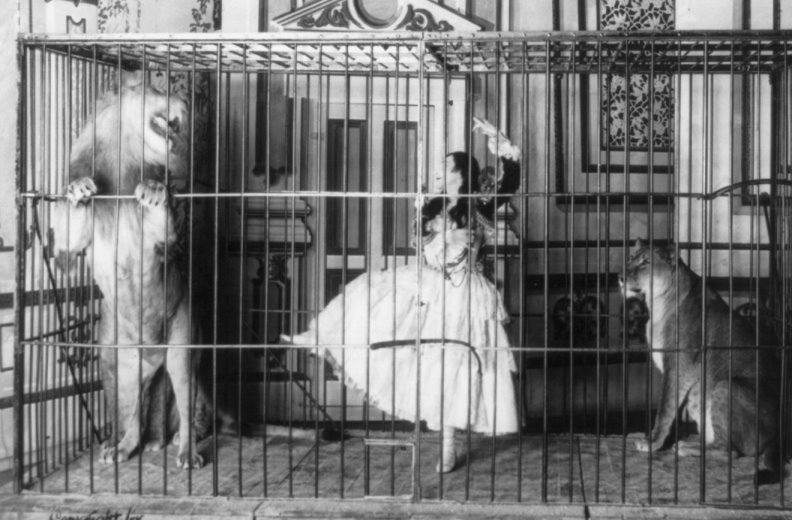
Adgie and her Trained Lions y (detail)
Degree Confluence Project
The goal of the project is to visit each of the latitude and longitude integer degree intersections in the world, and to take pictures at each location
29.4.06
26.4.06
I haven't figured out why Flickr bothers me. It doesn't bother me a lot, but enough I don't think about using it, or rather, when I do think about using it I don't.
So the default here, which is the somewhat lossy transfer of images into the great archival womb of Google.
I never use Photoshop.
The histogram function and once in a while the rotate-image function, almost always in Photofiltre. The majority of manipulation is cropping and that gets done in Xnview.
These are photos I took yesterday.
I take a lot of photos. Except for the flag and pyramid ones that show up at Informant38 I don't do anything with them. Which has created a carbuncle of hermetic guilt this is an attempt to relieve.
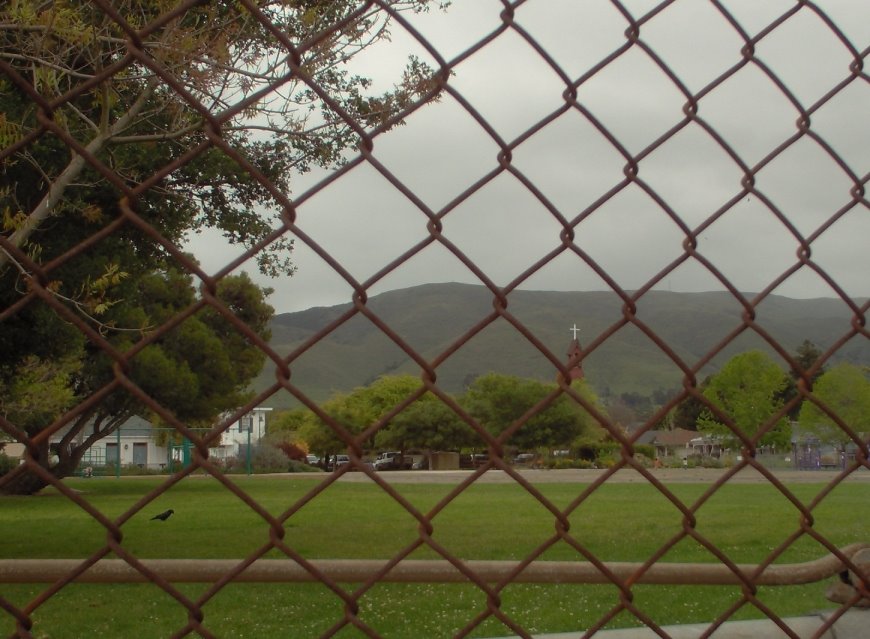
These four images are religious because I took three of them at the Spanish-Californiano mission here, and one on the way into downtown, where the mission is, at an other much-photographed church.
I was an altar boy at the mission when I was very young. It's changed dramatically and subtly in a lot of ways, though the basic architecture hasn't. Certainly the liturgy from what I know of it has been altered past immediate recognition.
If I had gone to the local university instead and spent an hour taking pictures there the images would have reflected that, being of books in the library stacks and the students, almost all of them children of Los Angeles, probably.
0425_594.jpg
0481.11.jpg
0425_589.jpg
0425_547.11.jpg
16.4.06
At the close of World War II the French nation was devastated. Reconstruction was a slow process. Farmlands had been ravished. War-damaged factories had to be rebuilt and retooled before industry could begin the production of civilian goods. By 1947, two years after the war ended, France had not yet sufficiently recovered to provide food and other necessities for her people.Merci Train:
Drew Pearson, a well known radio commentator and Washington Post columnist, suggested the American people do something to help ease the hunger. That was on October 11, 1947. Mr. Pearson suggested we send a boxcar filled with donated food to their former ally. Immediately the American people began to act; donations began pouring in from every state. Just three short weeks later an engine pulling 11 filled boxcars left L.A. bound for New York. Trains were added along the way, by the time it arrived in New York, 700 cars filled with tons of food, clothing, and medical supplies were lined up to be loaded on the S.S. American Leader.
-
In February 1949, a merchant ship docked at Weehawhen, New Jersey to deliver its cargo of 49 railroad boxcars that were marked on the side "TRAIN DE LA RECONNAISSANCE FRANCAISE", and on the other side "GRATITUDE TRAIN". These boxcars were laden with gifts from the French people in gratitude and appreciation to the United States for the "Friendship Train" which the French people received from the United States on December 18, 1947. The "Friendship Train" which was loaded with carloads of food, medicine and supplies was sent to France to help the people recover after WWII.
google images
-
Merci Train
a standard bearer whose primary effect was on morale
She had become the heroine of her kingdom at the age of seventeen, but died at the age of nineteen.Joan of Arc - Wikipedia
-
"Only a regime in the final straits of desperation would pay any heed to an illiterate farm girl who claimed that voices from God were instructing her to take charge of her country’s army and lead it to victory."
-
Illiterate Joan signed an abjuration document she did not understand under threat of immediate execution. The court substituted a different abjuration in the official record.
-
The old king had believed he was made of glass, a delusion no courtier had mistaken for a religious awakening.
-
Finally, Anne of Burgundy, the duchess of Bedford and wife to the regent of England, declared Joan a virgin during pretrial inquiries. For technical reasons this prevented the court from charging Joan with witchcraft. Ultimately this provided part of the basis for Joan's vindication and sainthood.
-
Three separate vessels of the French Navy have been named after Joan of Arc, including a helicopter carrier currently in active service.
Subscribe to:
Posts (Atom)